Hack #5
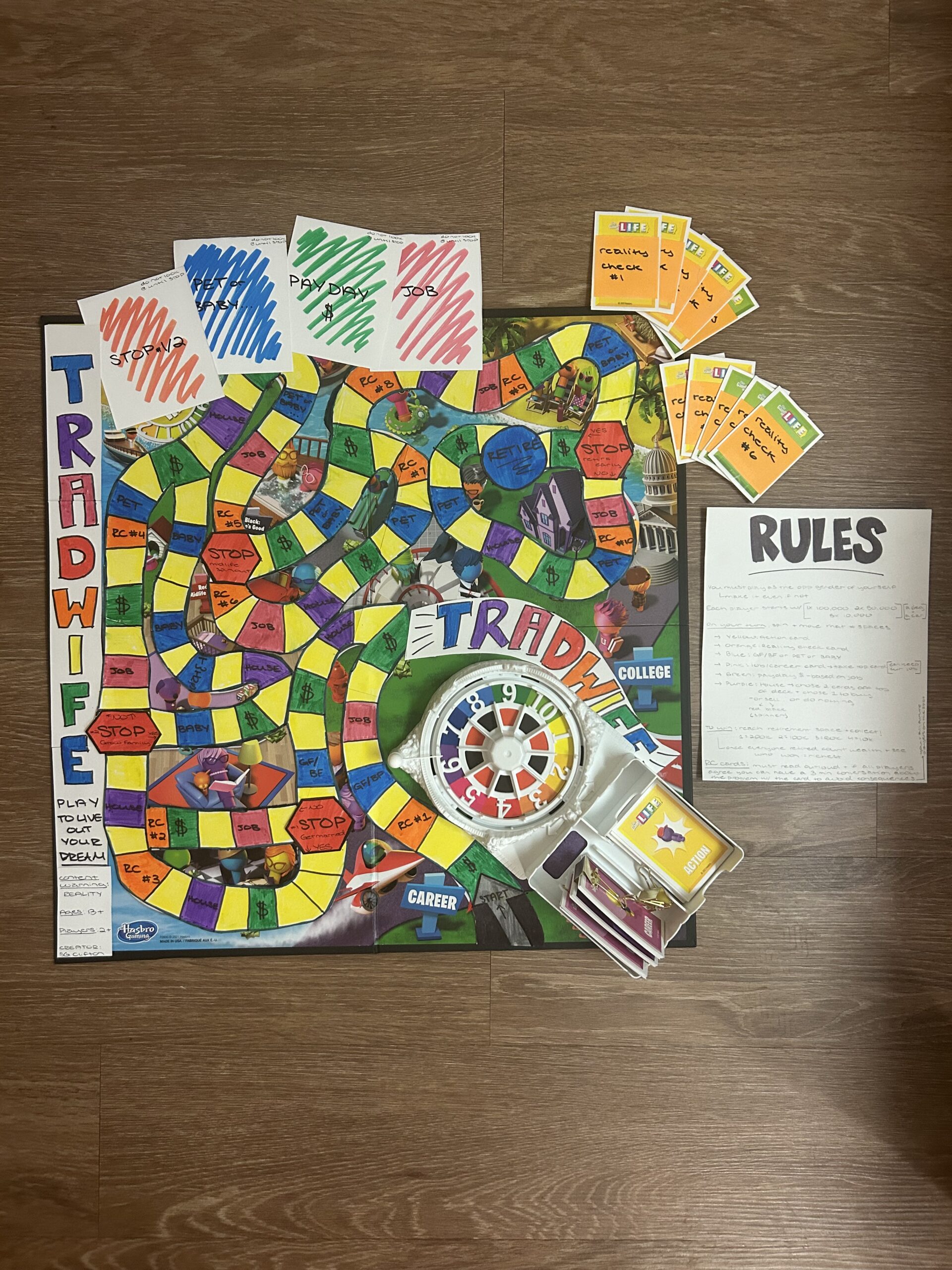
ARTIST STATEMENT
This Hack was the most fun for me because I really enjoyed creating this game and always love the opportunity to better one of my creations after receiving feedback. I decided that my approach to reimagining this process needed to start with the visual, because this was the aspect I felt was lacking the most from the alpha release. As I discussed in my design process journal, I originally thought the best approach was to create the board online in order to create a super streamlined product that was not reminiscent of “homemade.” However, after lots of trials and even more errors, I decided that the unique touch a handmade board added was necessary for my game. After this was decided, I knew I needed to fine-tune some of the rules and structure of the game. The thing that was lacking, tactically speaking, the most from my original version was the question of how the players would react to the information.
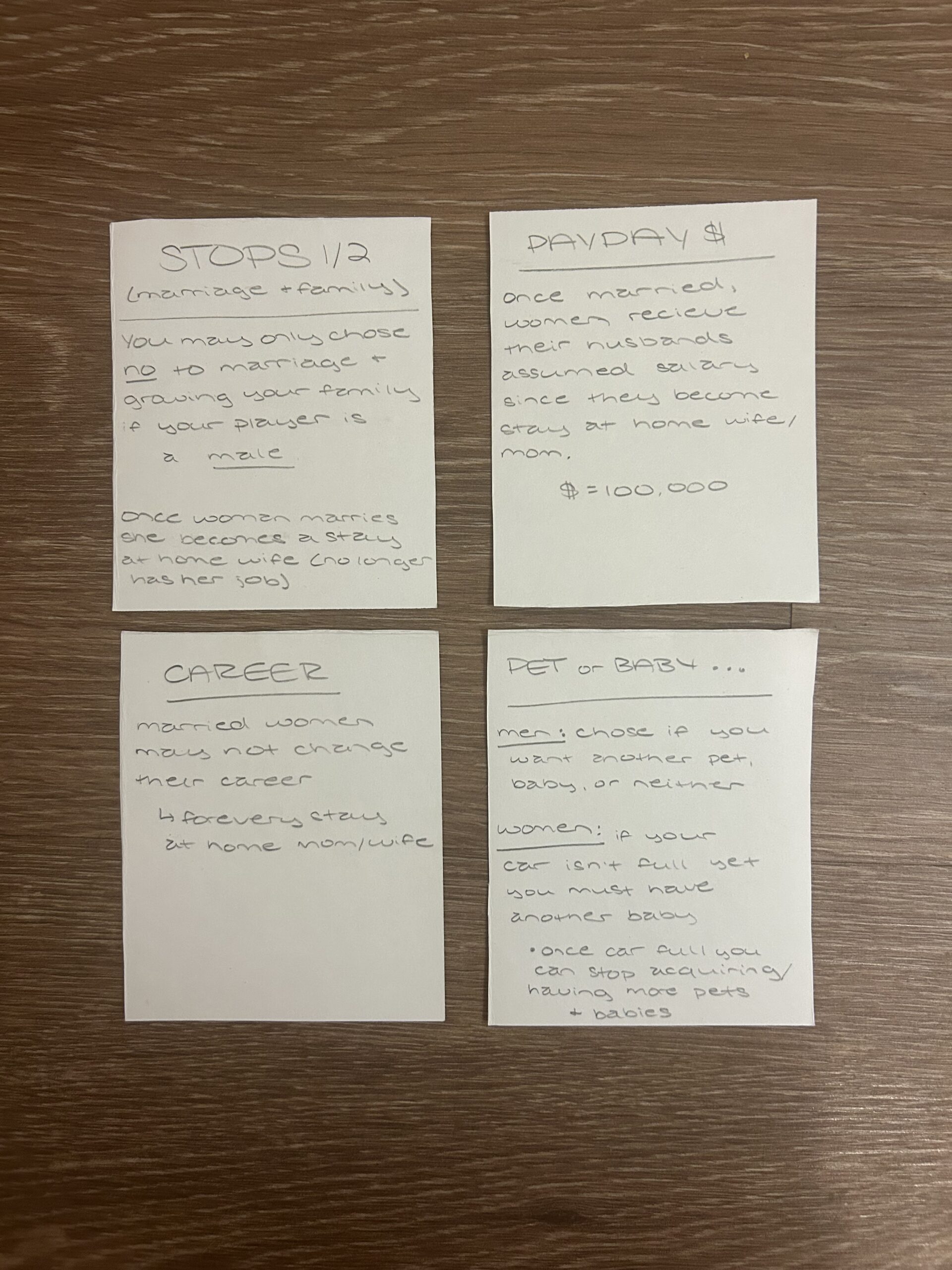
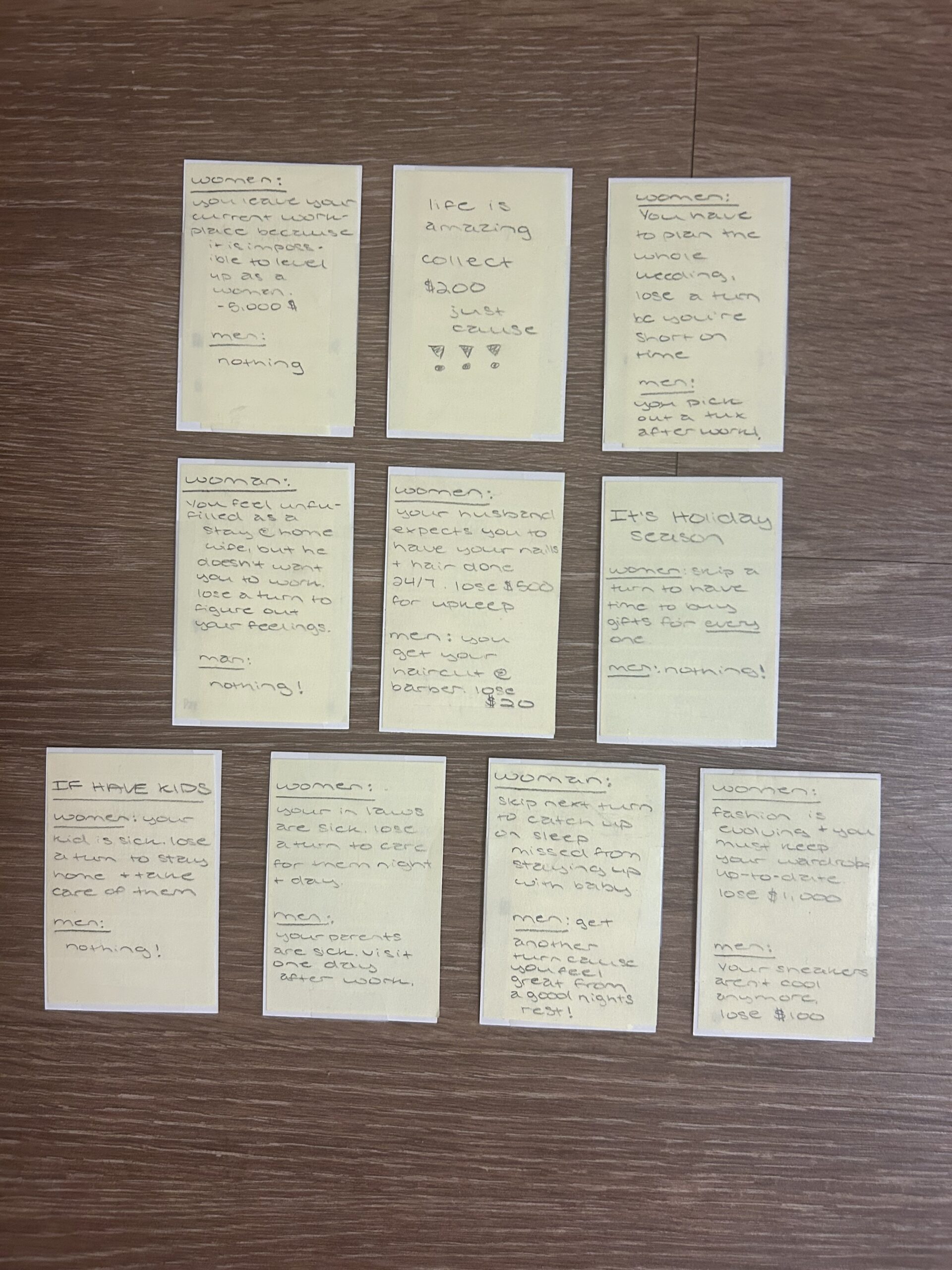
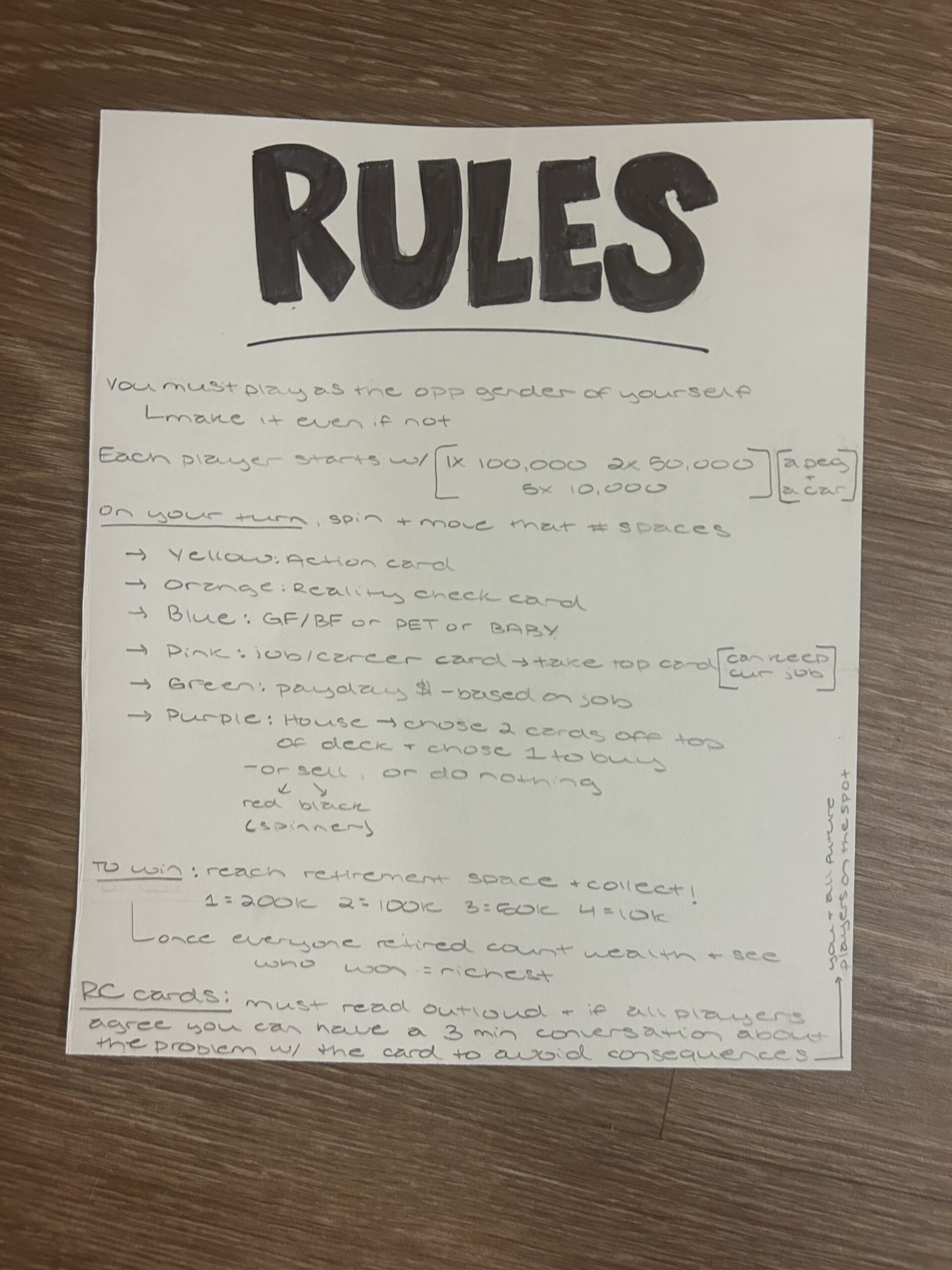
I created a game that had a clear message to highlight the inequities of the patriarchy and male-dominated society, but it did not necessarily force the players to interact or think critically about the issue. Therefore, I made the “Reality Check” card changes (encouraging critical conversation) and required males and females to switch roles upon starting the game in order to put individuals in a position they have not previously experienced. With these two critical changes, I hoped that the players would be forced to be in new, uncomfortable positions in order to realize the severity of the problems they might have never gone through. Additionally, you can bring up a problem, but if discussion is not required, then people might never hear important perspectives or treat it as significant.
Mary Flanagan’s definition of critical play, which she explains to be a “careful examination of social, cultural, political, or even personal themes that function as alternates to popular play spaces,” was a big inspiration to my reimagining. This inspired my alpha release; however, when I was reviewing my artist statement for Hack #2, I realized that it was a failure of the project: it was not a “careful examination” because it did not provoke or encourage conversation and reflection. Very similarly, something I also aimed to address was Flannagan’s concept that critical play requires a confrontational or intervention approach. My roommates and I played this game with their boyfriends, and boy, did they find it controversial. Not in the sense of thinking this stuff didn’t happen in real life but being upset that they actually had to deal with the consequences and hear the hard truth. Mary Flanagan was one of my favorite authors we read this semester, and critical play was definitely my favorite unit. I wanted to really embody the strength and power that she says critical play can have,
I think my beta version is a proactive version of my alpha release. Originally, the game was interesting yet merely introduced a concept. It could easily be played for fun without bringing any awareness to the injustices occurring: the message could be ignored and, therefore, forgotten. However, the newest version of Tradwife forces new roles, critical conversations, and uncomfortable realities. Unless someone is taken out of their comfort zone, they will never see or think about the problems affecting others, and this is what I hoped to do with the new version of this game. I do not want a guy to play this game and get excited because his female friend has to have four unwanted babies and constantly miss her turns while he gets to go through the game with complete free will and win. I really want Tradwife to not only shed light on an issue that continues to be present and even considered trendy but also to create conversation about the change that needs to occur.
DESIGN PROCESS
(I decided to keep a journal style of my design process to show what actually went on so I did not forget and could reflect on the decisions I made in real time
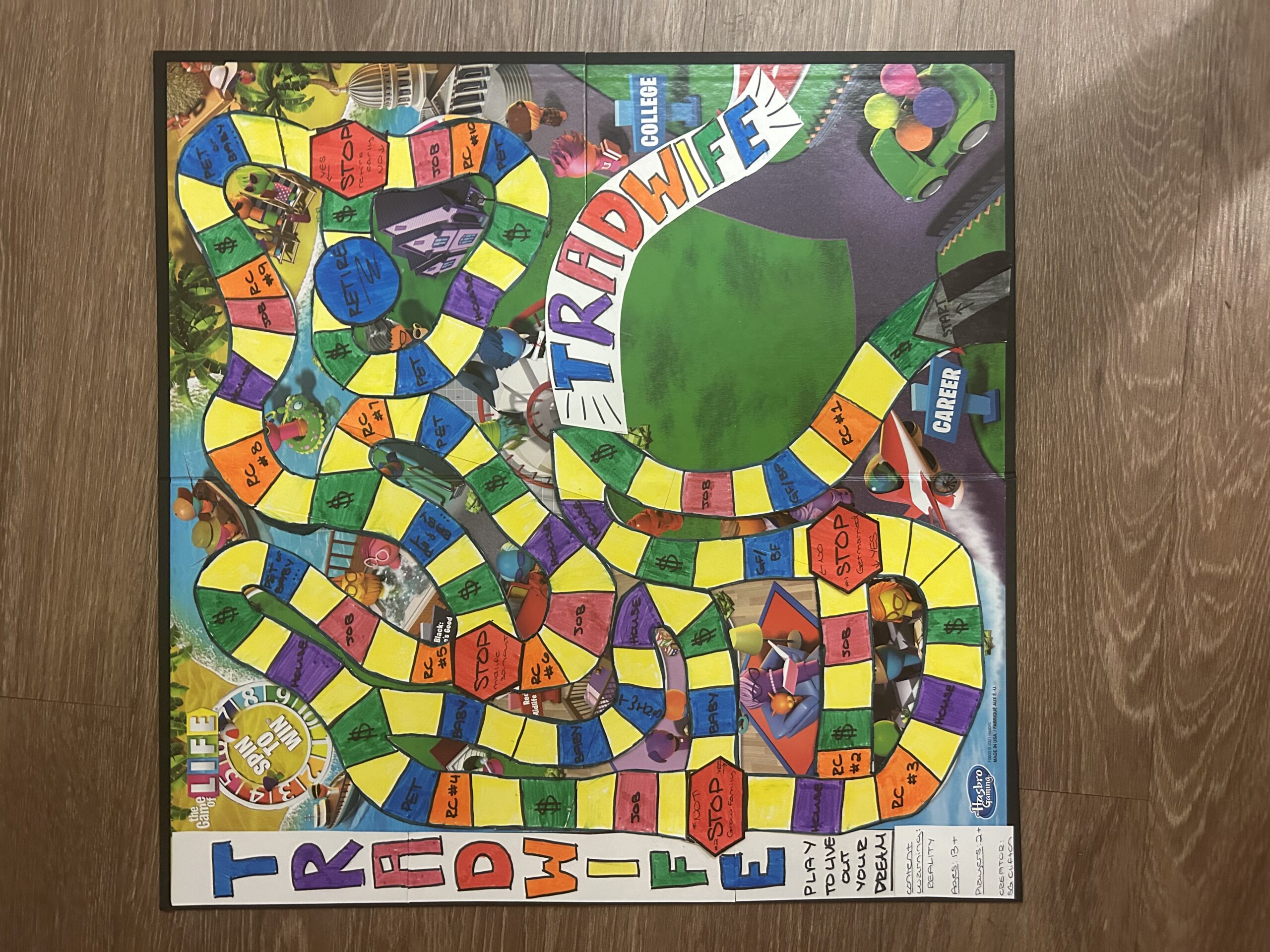
April 22nd: This was the first day that I started working on my Hack. I knew I wanted to improve some components of the game based on feedback from Dr. Sample and classmates, but the first thing I wanted to work on was the actual board. I did not have enough time during Hack #2 to make a clean, new board, so I just altered the real one. However, I knew that I wanted to make this Hack more reformed. I searched all over the internet for a board that I could edit or change (because I had found a template for the Monopoly board that could be edited for my other class). No such thing existed, so I wasted a lot of time looking for that! I then went to Photoshop and used the pen tool over the top of my old Game of Life board to create the same “path.” I then copied it onto a new board and added some decorations. It looked absolutely awful. Okay, not awful, but it was not giving anything I needed it to give. Although it looked much cleaner, everyone I asked agreed that it did not fit the vibe and that the level of personal creativity that came from the “done by hand” version was much better. In a fit of rage (because I spent HOURS trying to make it look good on Photoshop), I deleted everything (hence why I can’t show a picture!).
April 24th: I took a day off because I was so annoyed and thought there was no way to get it to look professional enough doing it by hand. I then decided that was the only way, so I started to brainstorm. I realized I needed to create a path out of paper to cover the one on the board while still showing the designs and illustrations. That also proved to be tricky because I had to trace and then trace again onto thicker material and cut for soooo long. Anyway, I had to figure out a solution and could then begin to work on the tactical aspects of the game. I was a bit skeptical because before, everything was colored and covered, and it looked rough.

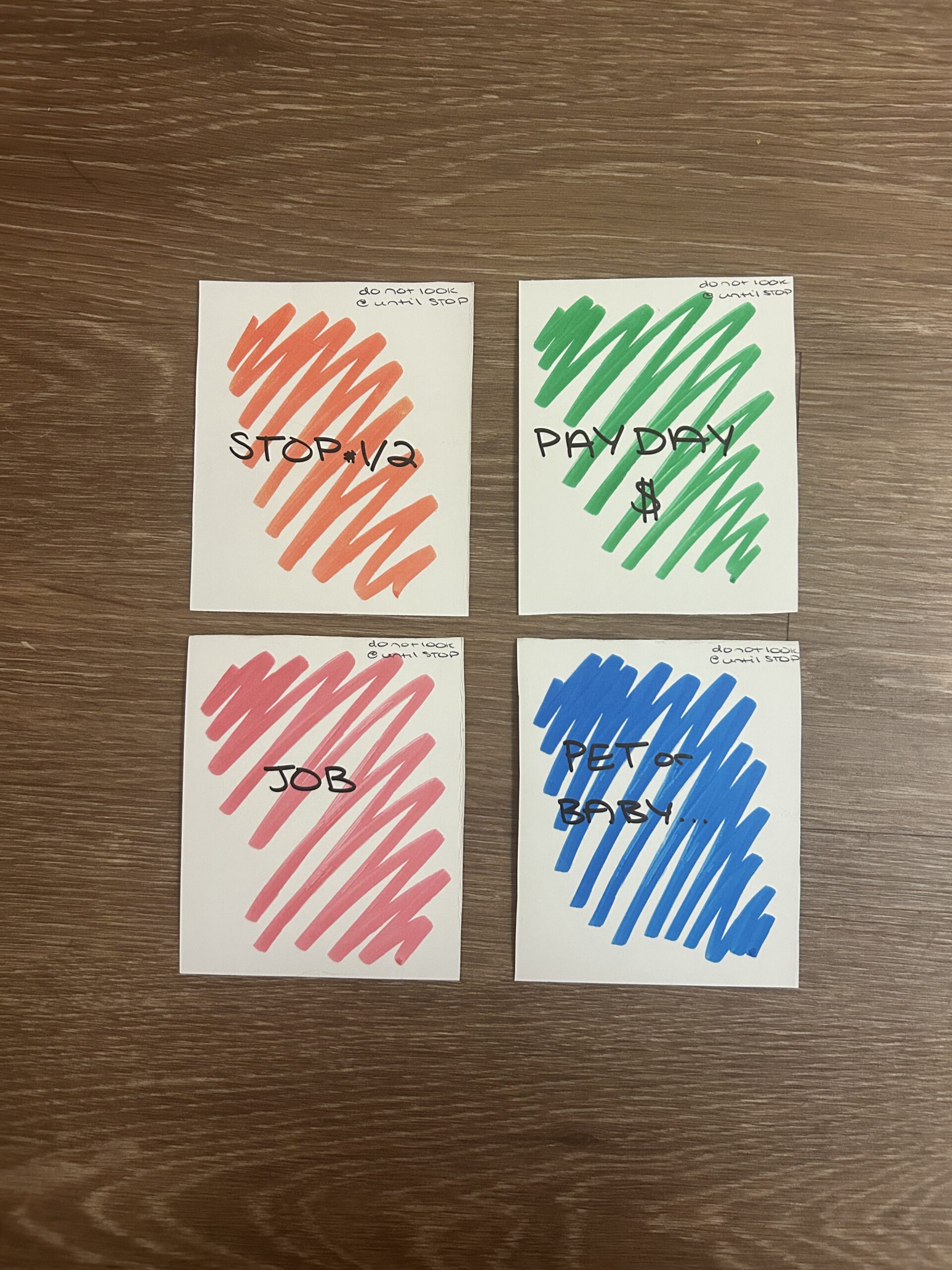
April 27th: I decided to take the biggest points of critique/suggestions from my classmates and Dr. Sample and use them to improve the logistics of the game. To start, Dr. Sample suggested I consider the impact of the “Reality Check” cards. Although they were very important and brought up great inequities, it did not matter if that was not how the players perceived them. As a result, I decided to make it an option for the person who draws each Reality Check card first to have the option (if everyone agrees) to have a conversation about it to be rewarded with no consequences. This, in my mind, forces conversation, debate, and recognition of the idea I am trying to push. Secondly, the main thing I thought about was that typically, we play similar characters in a game, so girls would want to play as girls and vice versa. This also completely skips over the important message of the game, which is why I created the rule that you must play as the opposite gender of yourself (at least having half and half represented) in order for people who don’t experience life as a woman at least get this simulation
April 28th: I had ironed out all of the rule changes and just had to spend a lot of time improving the visuals. Also decided to name it Tradwife in order to bring a sense of reality to a term that is “trending” right now for seemingly the wrong reasons and does not teach the next generation the full picture.

